Side hustles are an increasingly popular way to make a few extra bucks, but as the gig economy grows, so does the taxman’s reach.
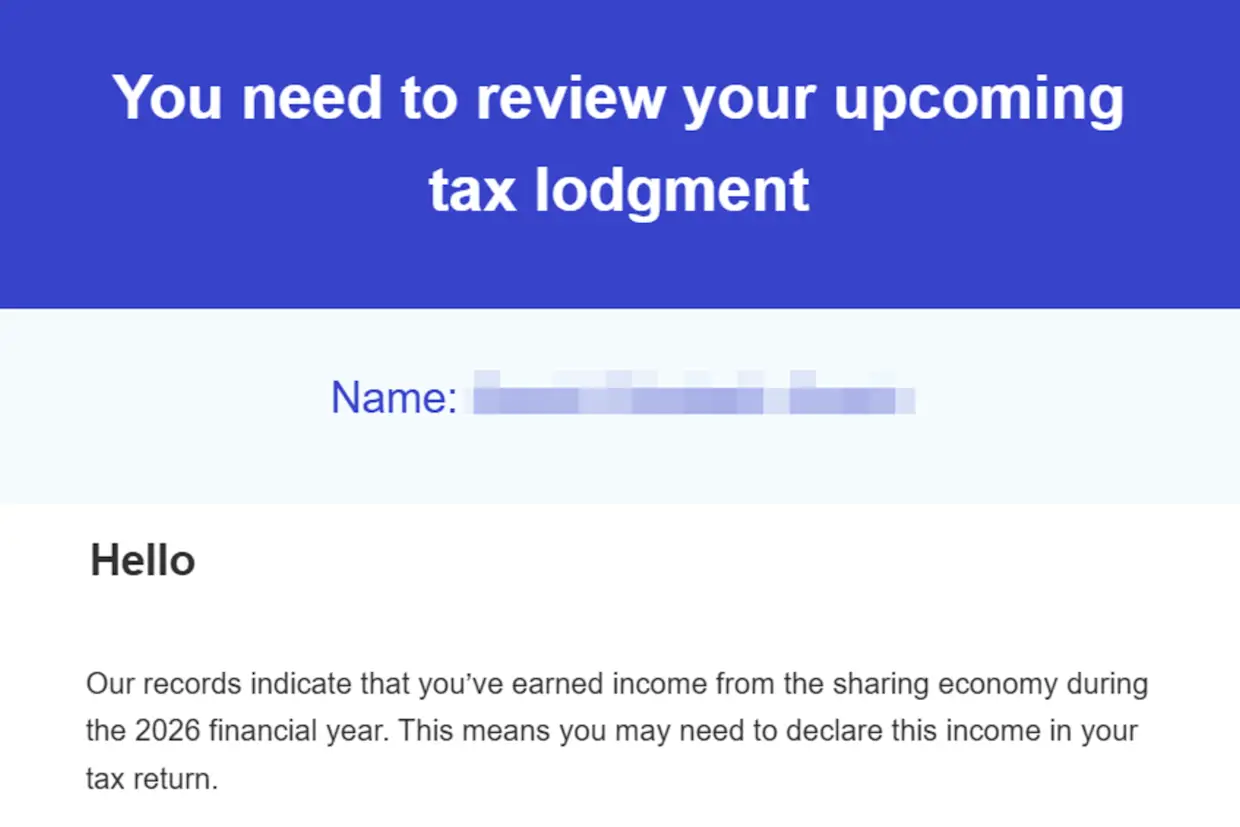
A letter sent by the Australian Taxation Office and viewed by nine.com.au reveals the extent to which authorities are cracking down on unreported income from side gigs.
The letter, which nine.com.au understands was sent to a pet-sitter registered on an online platform, warned them the ATO’s “records indicate that you’ve earned income from the sharing economy during the 2026 financial year. This means you may need to declare this income in your tax return.”
The ATO’s listed examples of “sharing economy” income sources included ride-sharing, accommodation-sharing, freelance work, renting out assets, and online content creation - but the list is by no means all-encompassing.
“Income you earn through the sharing economy is generally assessable and must be declared in your tax return, even if: you earn the income part time, casually or irregularly; you do not have an Australian business number (ABN); no tax was withheld from the payments you received,” the letter reads.
“Sharing economy platforms provide us with information about income earned through their services. This information does not automatically pre fill your tax return, so you must ensure you manually include all sharing economy income when you lodge.”
The ATO also warned that “penalties or interest” may be levied on an incomplete tax return.
Experts say this sort of thing isn’t a one-off, and that the ATO is growing increasingly knowledgeable about tracking side hustles.
Tax expert and author Adrian Raftery said people needed to accept the tax office had “some awareness” of how individuals’ various income streams.
Platforms like Airbnb, Uber, and even eBay all worked with the ATO to stay above board.
“The key thing is disclosure,” Raftery said.
He said people needed to claim tax breaks “proportionally” - for example, somebody renting out a single room for part of the year could not claim expenses for the rest of the private dwelling as work-related.
H&R Block Australia tax communications director Mark Chapman said Australians needed to understand most income from sourced like side hustles and cryptocurrency was taxable - “even if it feels informal”.
“A major mistake is assuming that ‘small’ or cash-based income doesn’t need to be declared,” Chapman said.
“The ATO’s data-matching capabilities are increasingly sophisticated, particularly with crypto exchanges and digital platforms.”
However, he said, people could claim expenses directly related to their side gig, such as for equipment, software, internet costs, or part of a phone bill.
Cryptocurrency trading might be the relatively new kid on the block when it comes to earning on the side, but Raftery and Chapman both said the ATO was placing increasing emphasis on tracking that income too.
“It doesn’t matter if it’s a $1 gain or a $1 loss, they get a report,” Raftery said.
Even changing cryptocurrencies, such as from Lithium to Bitcoin, could trigger capital gains tax if a profit is made - similar, Raftery said, to trading shares.
“If you’re trading frequently, the ATO may treat you as a business, meaning income tax rules apply instead,” Chapman said.
“Another common error is misunderstanding crypto tax events - many people don’t realise that swapping one cryptocurrency for another is taxable. Poor record-keeping is also a big issue, especially for people who have used multiple wallets or exchanges over time.”
He said keeping detailed records was critical for crypto investors, including dates, Australian dollar values, transaction types, and wallet addresses.
“Using tracking software can make a big difference. Without good records, people often either overpay tax or risk getting it wrong,” he said.